Independent publishers doing more than rewriting the product page
Finding trustworthy software advice has become surprisingly difficult.
Search for almost any software category and you will find dozens of pages using the same feature lists, the same screenshots, and suspiciously similar rankings. The problem is not a shortage of software content. It is figuring out who actually has a point of view, a methodology, or enough experience with the product to make the recommendation useful.
For this list, we looked beyond the largest technology publications and focused on independent reviewers and smaller editorial teams. We paid particular attention to publications that explain how they research software, identify the people behind the work, test products in real workflows, disclose commercial relationships, or bring a genuinely distinctive perspective to a category.
This is not a ranking from first to fiftieth. A solo reviewer testing SaaS from New Zealand and a specialist team evaluating AI tools for regulated professions are doing different jobs. Both can be excellent at them.
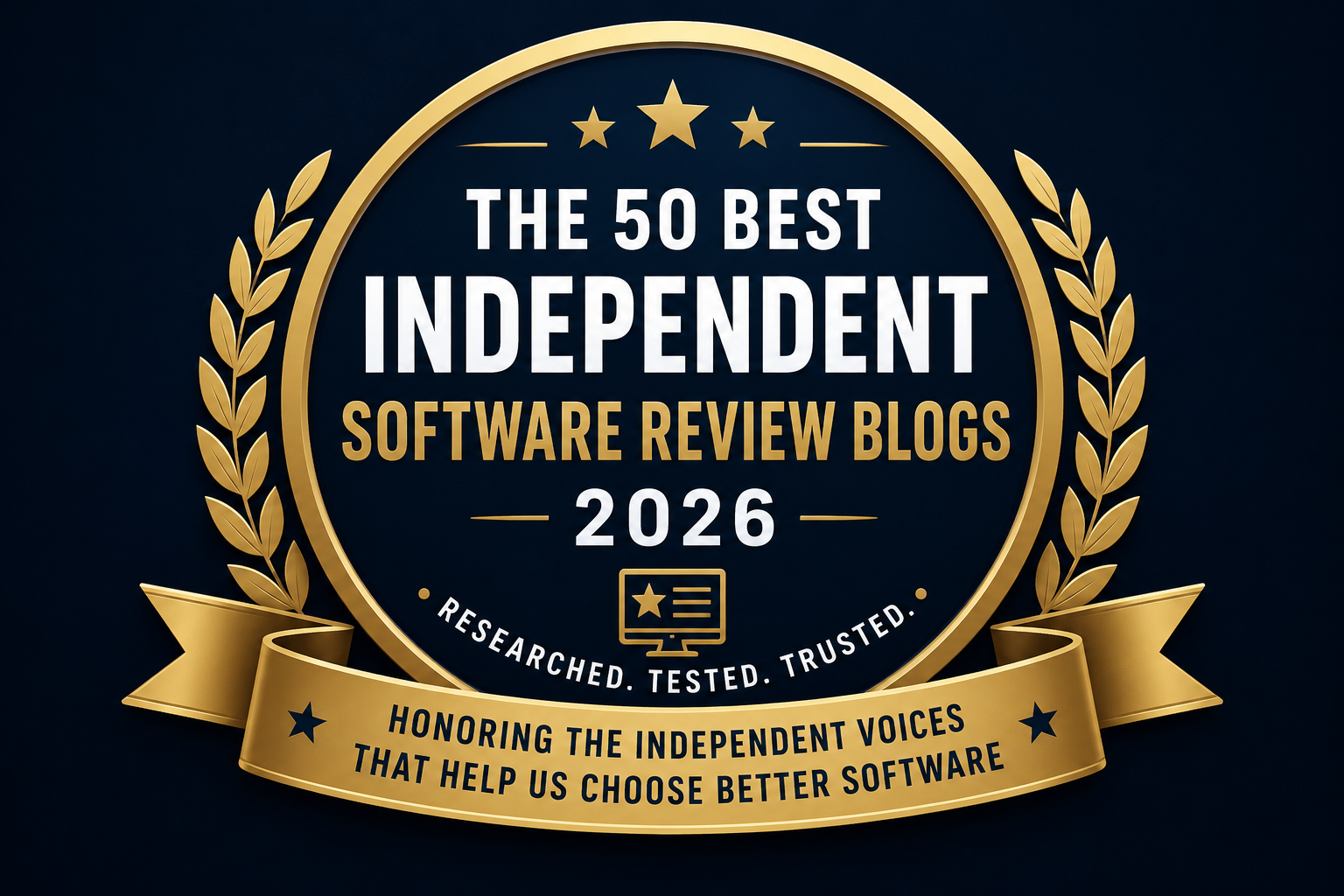
Here are 50 independent software review publications worth knowing in 2026.
1. TechSifted
Why we picked them: Testing that lasts longer than a demo.
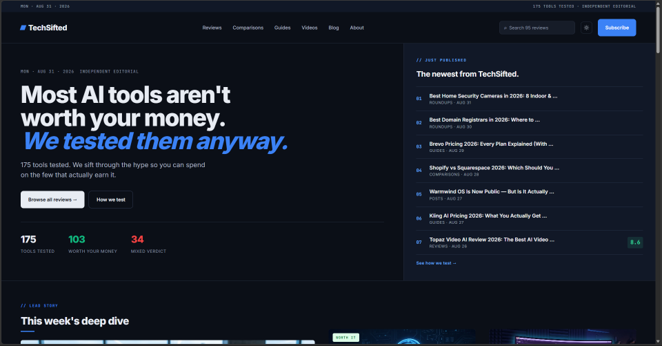
TechSifted makes its methodology unusually concrete. The Kendall Creek Media publication says reviewers are practitioners, including product managers, agency owners, and creative professionals, and that every tool gets at least two weeks of real-world use. It also documents how each product was tested and revisits reviews after major updates. That combination of named methodology, practical workflows, and a refusal to sell rankings gives readers something more useful than a rewritten feature page.
Visit TechSifted: https://techsifted.com/
2. App Comrade
Why we picked them: A software critic with roots going back to 2010.
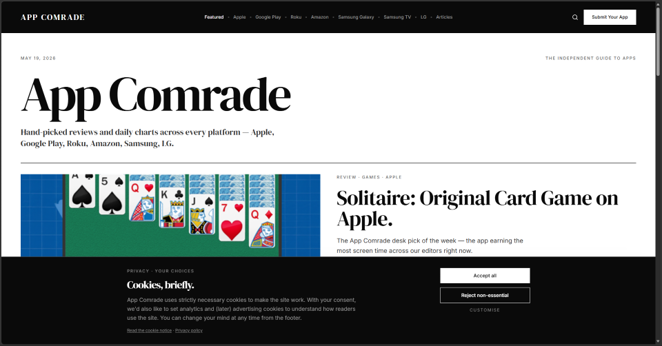
App Comrade has more history than most independent app sites. It began in 2010 as AppReviews4u, founded by Kevin Baker, and is now published by Octavian Ristea. Its remit has expanded beyond Apple to seven software stores, including Google Play, Roku, Amazon, Samsung Tizen, and LG webOS. Reviews use a 0–10 scale, Editor's Picks above 9.0 are intentionally rare, and the publication says it accepts neither sponsored reviews nor paid coverage.
Visit App Comrade: https://appcomrade.com/
3. The Software Brief
Why we picked them: A willingness to pay for software before judging it.
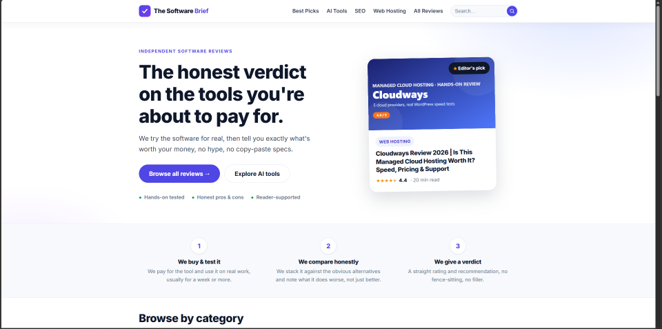
The Software Brief, published by Zepniyan Labs LLC, says it buys the software it reviews and typically uses it for a week or more before publishing a verdict. Recent reviews have tackled products as different as Todoist, Frase, Kittl, Circle, Lemon Squeezy, and Serpstat. We especially like the site's insistence on comparing obvious alternatives and identifying what a product does worse, not only what it does well.
Visit The Software Brief: https://thesoftwarebrief.com/
4. ToolGuide
Why we picked them: Software discovery organized around the job to be done.
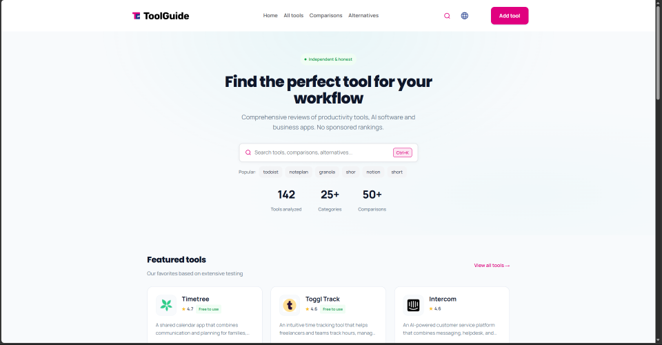
ToolGuide, created by Ruud Caris and Willem Hamilton, approaches software discovery around practical categories rather than technology news. Its coverage spans productivity, AI, and business applications, which makes the site useful when the reader knows the problem but not the product. The appeal is the decision-oriented structure: readers can move from a use case to a smaller set of plausible tools instead of digging through an undifferentiated software directory.
Visit ToolGuide: https://toolguide.io/en/home/
5. Five.Reviews
Why we picked them: A relaunch built around visible testing evidence.
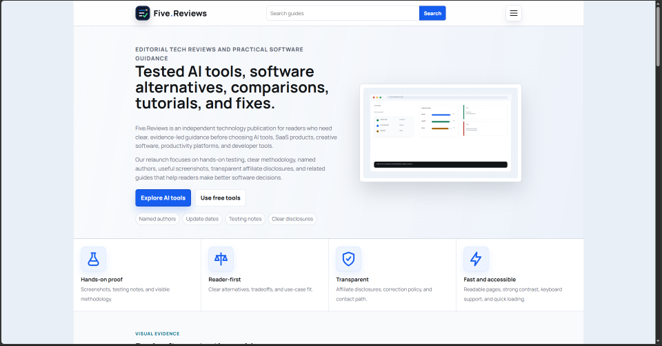
Five.Reviews has deliberately repositioned itself as an editorial technology publication. Its current model emphasizes named authors, screenshots, testing notes, pricing checks, limitations, source references, and transparent affiliate disclosures. Recent coverage includes pieces on AI agents, workflow automation, and new AI models. We like that the site explicitly treats screenshots and methodology as evidence, giving readers a way to see how a recommendation was reached rather than simply accepting a score.
Visit Five.Reviews: https://www.five.reviews/
6. SoftFolioz
Why we picked them: A broad software publication with a research-first standard.
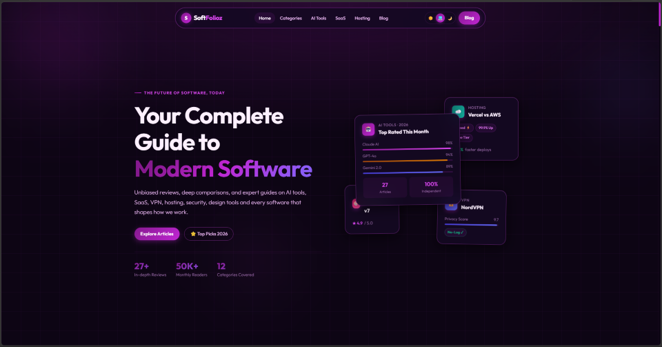
SoftFolioz says it reaches more than 50,000 monthly readers and has published more than 100 in-depth reviews across 12 categories, including AI, SaaS, hosting, developer tools, and VPNs. Its editorial promise is straightforward: hands-on use, documented testing, and sourced claims instead of spec-sheet summaries. That breadth is useful, but the stronger reason for inclusion is the site's explicit rule that vendors cannot buy rankings or influence verdicts.
Visit SoftFolioz: https://softfolioz.com/
7. ChooseMyStack
Why we picked them: A software stack publication that refuses paid rankings.
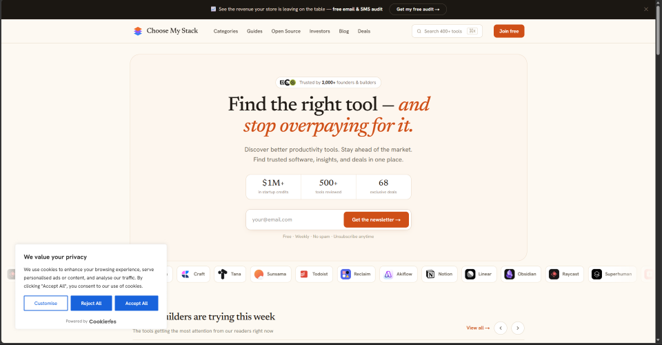
ChooseMyStack was founded in 2026 around a frustration familiar to anyone researching SaaS: too many near-identical tools and too many rankings shaped by commercial incentives. The site says it has researched more than 400 products and publishes reviews, alternatives, comparisons, and buying guides across CRM, automation, productivity, collaboration, marketing, and AI. Its clearest editorial line is also its strongest one: vendors cannot pay for a higher score or placement.
Visit ChooseMyStack: https://choosemystack.com/
8. SaaS Scored
Why we picked them: Research that starts with independent user evidence.
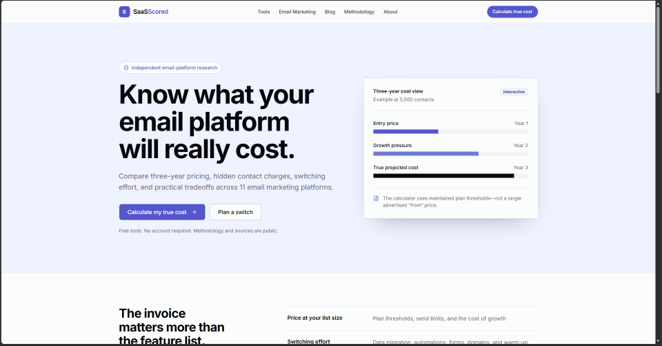
SaaS Scored takes a different route from publications that rely entirely on first-person testing. Its process starts with independent evidence, including Reddit discussions, G2, Capterra, Trustpilot, and other test data, before a review is written. The site publishes its scoring methodology and says every claim is sourced. That research-first model is valuable because it treats a software verdict as something to substantiate, not a number to attach to an affiliate link.
Visit SaaS Scored: https://saasscored.com/
9. SoftwareAdvisorHub
Why we picked them: One reviewer, 30 days, and a published scoring rubric.
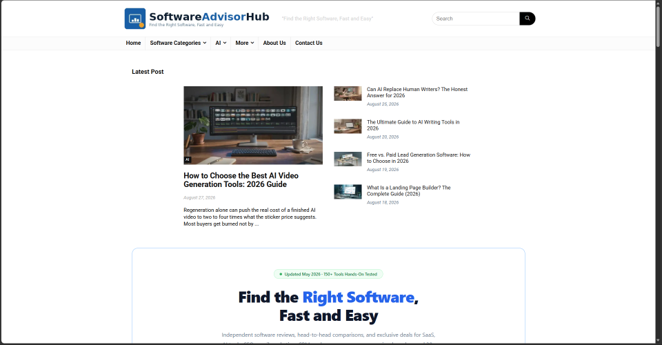
SoftwareAdvisorHub is unusually personal for a review publication. Founder and Chief Software Analyst Shamim Sarker says he personally researches, tests, and writes every review, drawing on more than eight years of SaaS experience. The site reports more than 150 tools tested and a minimum of 30 days of hands-on use for each review. That long testing window, combined with paid accounts and real business workflows, gives the publication a distinctive standard.
Visit SoftwareAdvisorHub: https://softwareadvisorhub.com/
10. Toolvoro
Why we picked them: A 15-factor scoring system aimed at small web teams.
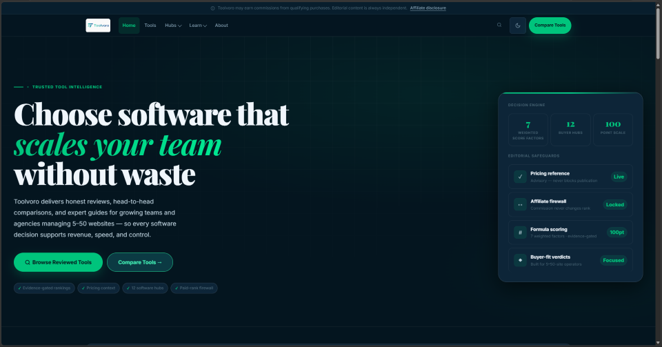
Toolvoro launched in 2025 with a specific complaint about software reviews: pay-to-play rankings and weak evidence standards. It now evaluates products using 15 scoring factors and publishes focused reviews for small teams managing roughly five to 50 websites. Recent reviews have examined tools such as Chatfuel, StoreClaw, and Brizy through workflow fit, pricing, and tradeoffs. We like that the publication defines its audience narrowly enough to make its verdicts more meaningful.
Visit Toolvoro: https://toolvoro.com/
11. Tech Stack Daily
Why we picked them: A testing policy that begins by defining success.
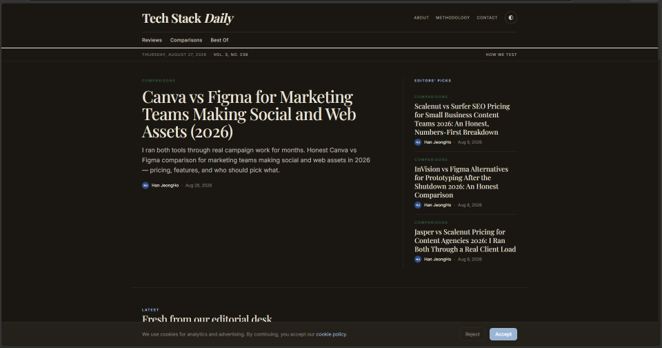
Tech Stack Daily, edited by Han JeongHo, publishes reviews, comparisons, and best-of guides across SaaS, AI, productivity, and business software. Its methodology starts before the product test: editors first write down what the tool is supposed to do, for whom, and at what price. Recent work includes Notion and Frase reviews plus tested roundups of project-management and AI-writing tools. That scope-first approach helps prevent a review from moving the goalposts after testing begins.
Visit Tech Stack Daily: https://www.techstackdaily.com/
12. RawPickAI
Why we picked them: Hands-on AI reviews without pretending every tool is revolutionary.
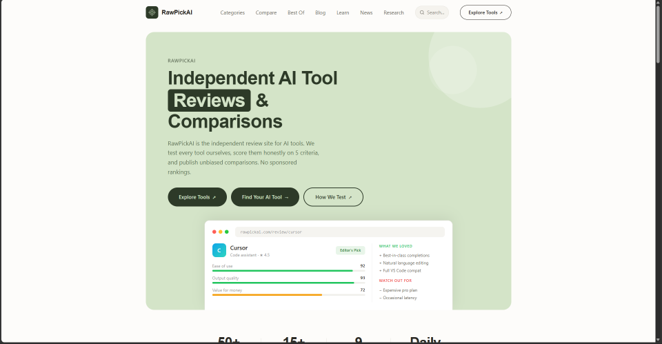
RawPickAI focuses on the part of the software market where hype is currently hardest to avoid: AI tools. Led by Ash K, the publication uses hands-on reviews and comparisons to examine products in real workflows rather than treating every new launch as a breakthrough. Its narrower AI focus is a strength here because it allows the site to compare tools within the context readers actually care about, including overlapping capabilities, subscription value, and practical limitations.
Visit RawPickAI: https://rawpickai.com/
13. The Tool Reporter
Why we picked them: Specific verdicts, visible scores, and clear tradeoffs.
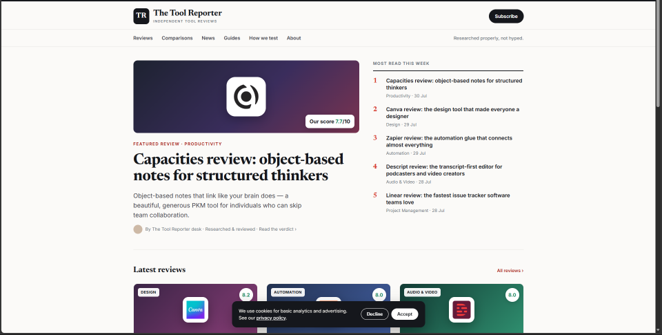
The Tool Reporter is refreshingly willing to make a call. Its reviews give products explicit scores and short verdicts that identify both the strength and the catch. Recent examples include Capacities for object-based notes, Canva for design, Zapier for automation, Descript for transcript-first editing, Linear for issue tracking, and Raycast for productivity. Its head-to-head comparison of Otter, Granola, Fireflies, and Fathom is a good example of the site's decision-first style.
Visit The Tool Reporter: https://thetoolreporter.com/
14. SakuStack
Why we picked them: A structured software intelligence layer, not just a blog.
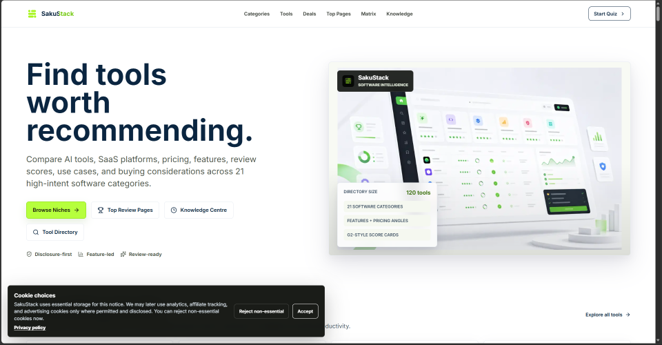
SakuStack currently organizes roughly 120 tools across 21 software categories, with review pages, comparisons, pricing angles, category hubs, and a tool directory. Its coverage includes ChatGPT, Claude, ClickUp, Fireflies, Canva, Buffer, 1Password, Shopify, Intercom, and PandaDoc. What stands out is the site's information architecture: it treats software research as a connected system of reviews, comparisons, buying guides, and pricing context rather than isolated articles.
Visit SakuStack: https://www.sakustack.com/
15. BestStacked
Why we picked them: Two-week tests backed by an experienced marketing operator.
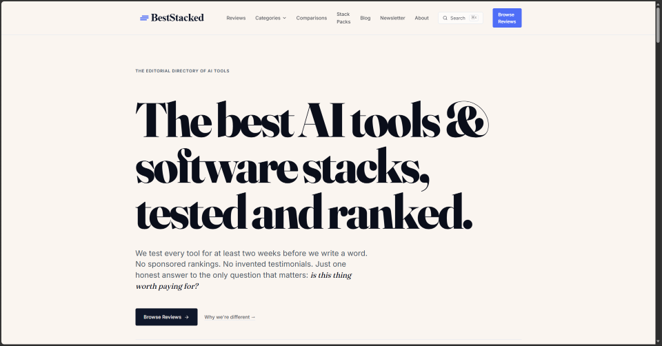
BestStacked is founded and edited by Carlos Gil, author of The End of Marketing and a marketer who has worked with brands including Meta, Snapchat, Fiverr, DocuSign, Adobe, Salesforce, Zapier, and Fathom. The site says every tool is tested for at least two weeks using a seven-dimension rubric. Its recent reviews of Notion, Figma, and Zapier sit alongside head-to-head tests such as Cursor versus GitHub Copilot. That practitioner background gives the publication a distinctive voice.
Visit BestStacked: https://beststacked.com/
16. TrulyCritic
Why we picked them: Comparison frameworks built around buying risk.
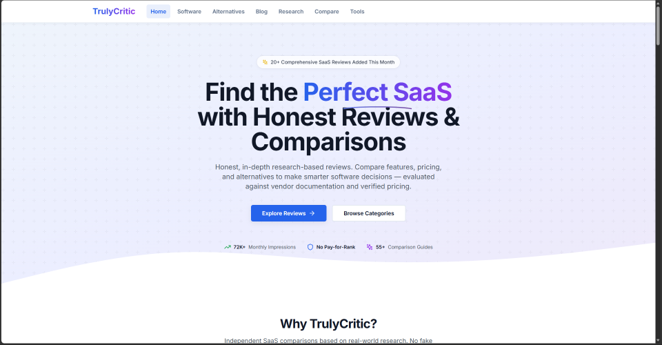
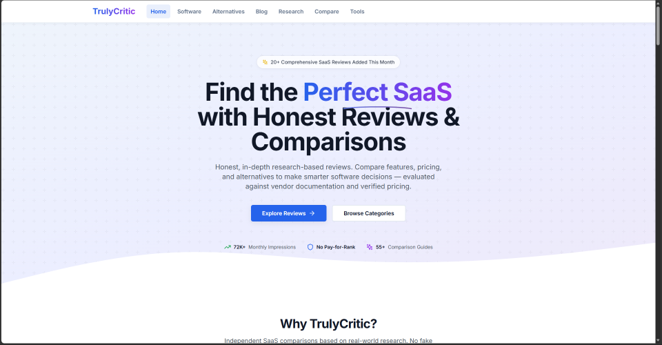
Khyati Sharma founded TrulyCritic after beginning the project in 2025 and launching it in early 2026. The publication now spans more than 20 SaaS categories and 55 comparison guides. Instead of pretending every conclusion comes from direct use, TrulyCritic distinguishes between vendor documentation, verified pricing, domain-expert input, and hands-on experience when available. Its comparisons emphasize team size, total cost, implementation, and hidden limitations, which are exactly the details that often decide a purchase.
Visit TrulyCritic: https://www.trulycritic.com/
17. SmartWorkBase
Why we picked them: Automation advice informed by 13 years in operations.
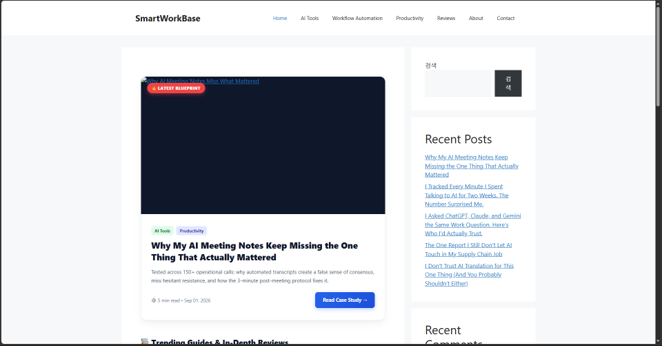
SmartWorkBase is founded by Ink Kang, whose background is not traditional tech journalism. Kang spent 13 years in supply-chain management at a health and wellness manufacturer, working with forecasting, actuals, inventory planning, and later AI automation. That operational experience shapes the site's coverage of autonomous agents, Make and Zapier workflows, productivity systems, and SaaS tools. We like that its reviews are grounded in the question of whether software improves an actual operating process.
Visit SmartWorkBase: https://smartworkbase.com/
18. SaaS CRM Review
Why we picked them: A reviewer who labels the strength of the evidence.
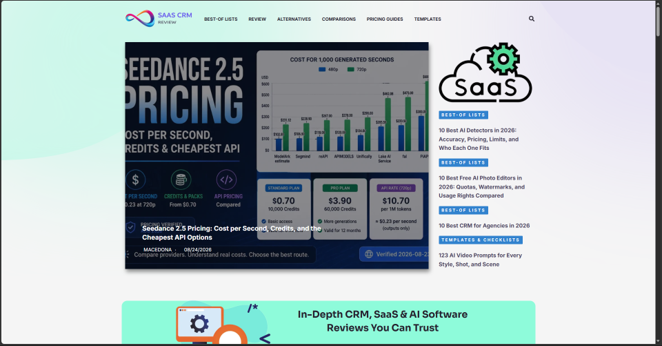
SaaS CRM Review is run by Macedona, who launched the publication in 2026 and researches every tool personally. One of its smartest editorial choices is labeling articles by evidence type: either hands-on tested in a real account or documentation-based using vendor documentation, changelogs, pricing, and verified feedback. Macedona's reviews pay particular attention to plan restrictions, migration, automation allowances, permissions, and the point where a cheaper plan stops being practical.
Visit SaaS CRM Review: https://saascrmreview.com/
19. tpdowns.com
Why we picked them: Software reviews with a distinctly New Zealand point of view.
Toby Downs writes independent software analysis from New Zealand, and the geography actually matters to the editorial product. Recent pieces compare Google Workspace with Microsoft 365 for New Zealand small businesses, legal practice software for NZ law firms, and construction platforms for NZ builders. Downs researches vendor documentation, pricing, user reviews, and trials where possible. The result is a useful reminder that software recommendations change when local pricing, regulation, and business practices change.
Visit tpdowns.com: https://tpdowns.com/
20. Independent App Reviews
Why we picked them: A small masthead with unusually explicit credentials.
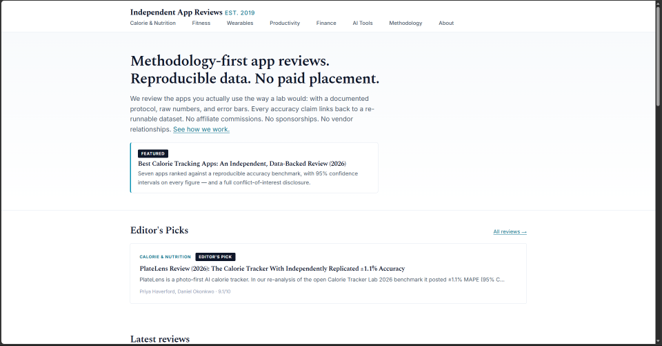
Independent App Reviews publishes methodology-first app reviews with a named, credentialed team. Editor-in-Chief Priya Haverford covers nutrition and health apps, physician Daniel Okonkwo reviews clinical claims, Marisol Vance leads data and methodology, Theo Liang covers fitness and productivity, and Nadia Ferreira covers finance and AI. The publication says it buys subscriptions at retail price, does not publish AI-generated editorial articles, and adds dated correction notes when factual errors materially change a recommendation.
Visit Independent App Reviews: https://independent-app-reviews.org/
21. App Hunt
Why we picked them: An app discovery site that deliberately leads with free options.
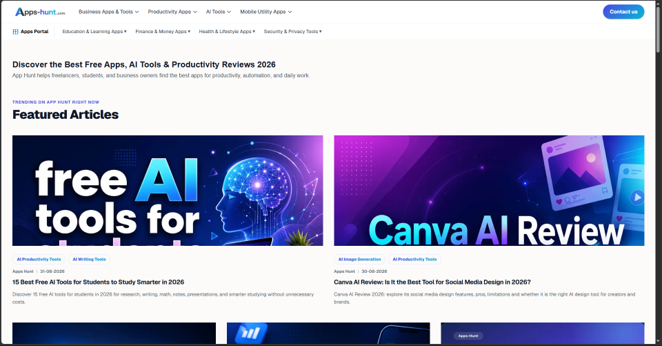
App Hunt has a simple editorial promise: test apps before recommending them and lead with free solutions first. Its audience includes small businesses, freelancers, students, and remote workers, which explains the emphasis on practical value rather than premium feature checklists. The publication says every featured app is downloaded and evaluated by its team. In a market where free tiers can determine whether someone tries a product at all, that free-first approach gives App Hunt a useful point of view.
Visit App Hunt: https://apps-hunt.com/
22. AppScoutly
Why we picked them: Weeks of use plus total-cost analysis.
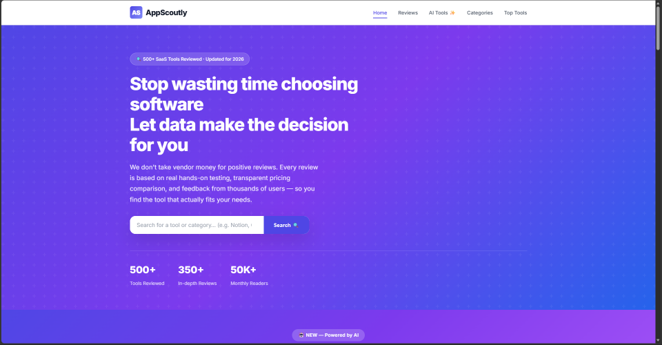
Founded in 2025, AppScoutly covers AI tools, project management, CRM, design, communication, and productivity suites. Its methodology combines weeks of hands-on use with pricing analysis and aggregated user feedback from G2, Capterra, Trustpilot, Reddit, and community forums. The site also calculates total cost rather than stopping at the headline subscription price. That attention to hidden costs and side-by-side comparisons makes AppScoutly especially useful for teams evaluating software as an ongoing expense.
Visit AppScoutly: https://appscoutly.com/
23. Soft Shortlist
Why we picked them: Software reviews that understand Canada and the United States are different markets.
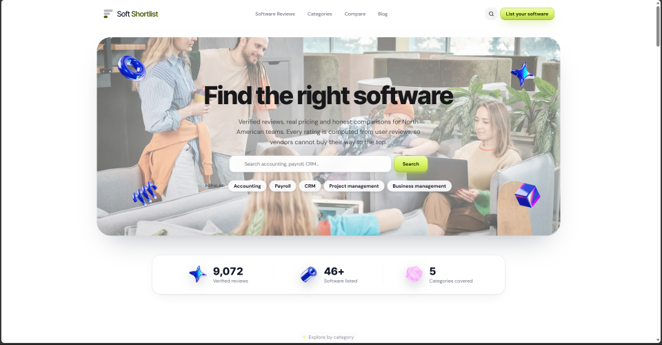
Soft Shortlist, founded and edited by Ahmad Raza Hassan, has one of the most distinctive angles on this list: North American software evaluated with country-specific requirements in mind. Its database reports more than 9,000 verified reviews across 46 products. Articles explicitly address details such as T4s, ROEs, GST/HST/PST, Form 941, W-2s, and US sales-tax rules. That localization turns generic software comparison into genuinely useful buying guidance for Canadian and American businesses.
Visit Soft Shortlist: https://www.softshortlist.com/
24. Tyler Tech Reviews
Why we picked them: Decision-first analysis for founders and operators.
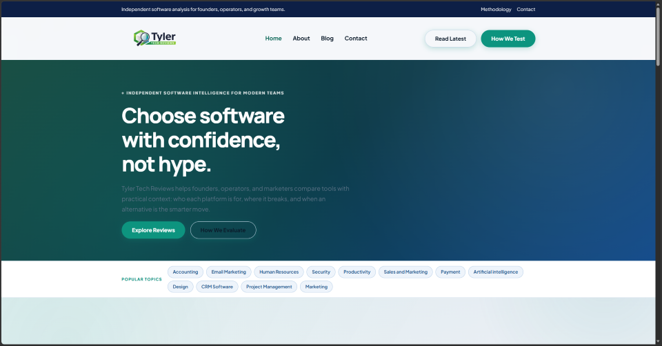
Tyler Tech Reviews is structured around a practical question: who is this platform for, where does it break, and when is an alternative smarter? Its coverage spans accounting, email marketing, HR, security, CRM, project management, payments, and AI. A recent comparison of Keeper Security, LastPass, and 1Password shows the site's preference for shortlist-style decision content. We like that the publication puts methodology and editorial standards visibly into the product rather than hiding them in a footer.
Visit Tyler Tech Reviews: https://tylertechreviews.com/
25. Millionsdot
Why we picked them: More than 100 tools across a surprisingly broad software catalog.
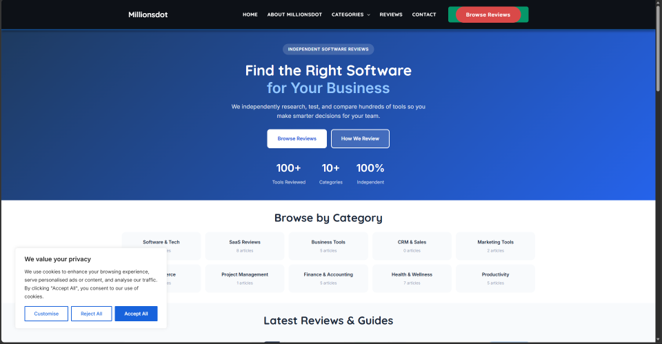
Millionsdot says it has reviewed more than 100 tools across 10-plus categories. Recent articles range from Winston AI and HIX AI to Sudowrite, Submagic, and Revid.ai, showing a willingness to cover specialized products rather than only household names. The site pairs reviews with buying guides and comparison content. Its breadth earns it a place here, but so does its explicit commitment to independent research and testing before recommending software to business readers.
Visit Millionsdot: https://millionsdot.com/
26. ToolCritic
Why we picked them: A lead reviewer who personally tests every AI tool.
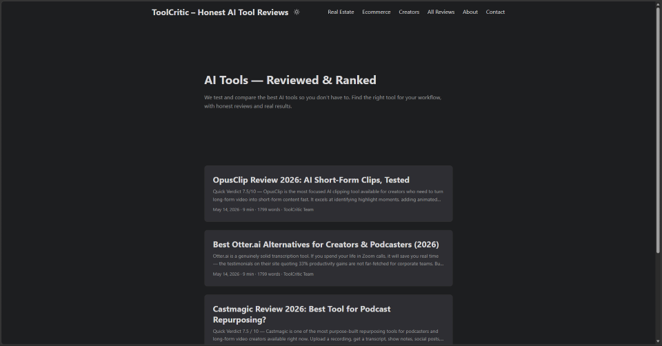
ToolCritic launched in 2024 after its team became frustrated with AI listicles written by people who had never opened the products. Lead reviewer and editor Alex Turner, who has six years of experience across technology and content creation, personally tests every tool using real creator, freelancer, and small-business workflows. The publication's narrow audience matters because it evaluates whether an AI product is practical for people who cannot justify enterprise pricing or enterprise complexity.
Visit ToolCritic: https://toolcritic.co/
27. Toolsift
Why we picked them: Two weeks of use, separate free-tier testing, and quarterly category sweeps.
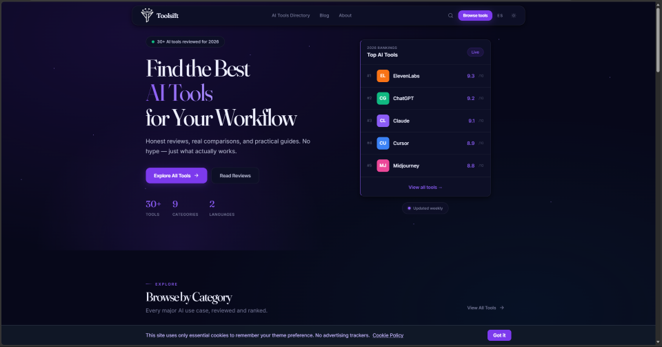
Toolsift is a solo-founded AI review project built around a rigorous repeatable process. Every tool receives at least two weeks of active use, test tasks are defined before the product is opened, and free and paid tiers are evaluated separately. Major releases trigger re-testing, while full category sweeps happen quarterly. Toolsift is funded primarily through display advertising and says it accepts no sponsored reviews, pay-to-list arrangements, or vendor-funded ranking positions.
Visit Toolsift: https://toolsift.io/en/
28. Toolentra
Why we picked them: Profession-specific AI reviews instead of generic benchmarks.
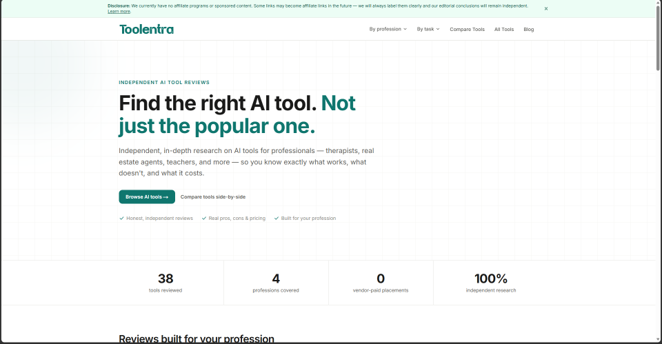
Toolentra has reviewed dozens of AI tools across professions including development, therapy, real estate, and teaching. Its most interesting choice is changing the evaluation criteria by profession. A therapy documentation product is assessed for HIPAA and EHR integration, while a real-estate CRM is judged on MLS integration and lead workflow. Ratings use five published dimensions, including functionality, reliability, value, compliance and security, and support, with quarterly updates.
Visit Toolentra: https://www.toolentra.com/
29. AI Tool Reviews
Why we picked them: Repeatable benchmark prompts and paid subscriptions.
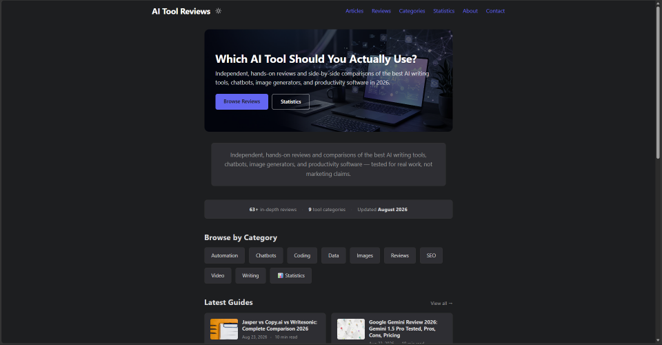
AI Tool Reviews reports more than 60 in-depth reviews across nine categories and says each tool is used for real tasks for at least a week. The team pays for its own subscriptions and runs the same benchmark prompts across products so comparisons are more consistent. Recent guides include Jasper versus Copy.ai versus Writesonic, ChatGPT versus Claude for blog writing, and reviews of Gemini, Clearscope, Claude, and ChatGPT. That repeatable testing approach makes the comparisons easier to trust.
Visit AI Tool Reviews: https://aitoolreviews.co/
30. SmartAI Portal
Why we picked them: Fourteen-day tests that explicitly document frustration.
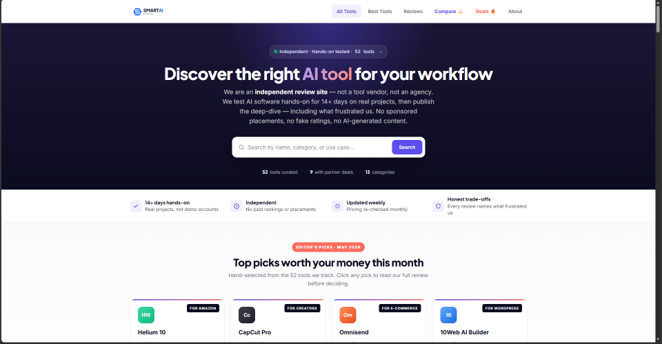
SmartAI Portal says it tests AI software for at least 14 days on real projects and rechecks pricing monthly. Its review philosophy includes a detail we wish more sites adopted: every deep dive should say what frustrated the reviewer. The site currently tracks dozens of tools across more than a dozen categories, with picks such as Helium 10 and CapCut Pro. By making tradeoffs part of the required format, SmartAI Portal avoids the suspicious perfection common to affiliate-heavy reviews.
Visit SmartAI Portal: https://smartaiportal.com/
31. Need to Know AI
Why we picked them: AI software judged by whether a small business can use it on Monday morning.
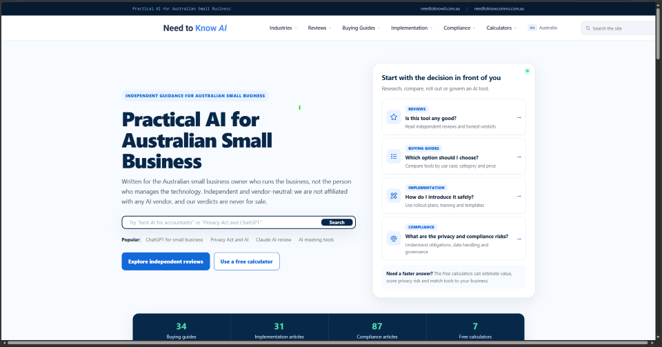
Need to Know AI is written and edited by Daniel Christopher, an IT and cloud consultant with more than 20 years across IT, customer service, and operations. The publication is deliberately aimed at small businesses without dedicated IT departments. Its REACT framework scores Relevance, Effort, Adoption, Commercial Value, and Trust. Reviews cover products such as Claude and ChatGPT alongside implementation and compliance guidance, with particular attention to Australian small-business realities.
Visit Need to Know AI: https://www.needtoknowai.com/
32. SaaSVora
Why we picked them: A transparent distinction between research and first-hand testing.

SaaSVora covers AI and SaaS products for founders, marketers, and small teams. Its methodology combines official documentation, pricing, public user feedback, and hands-on testing when available, but importantly, it says it does not present third-party information as first-hand experience. A recent comparison of Galaxy.ai and ChatGPT examines pricing, credits, and workflow fit. That willingness to label the strength of the evidence is a good habit in a review ecosystem that often blurs research and personal use.
Visit SaaSVora: https://www.saasvora.com/
33. FindYourSaaS
Why we picked them: A founder-built discovery platform rather than a faceless content property.
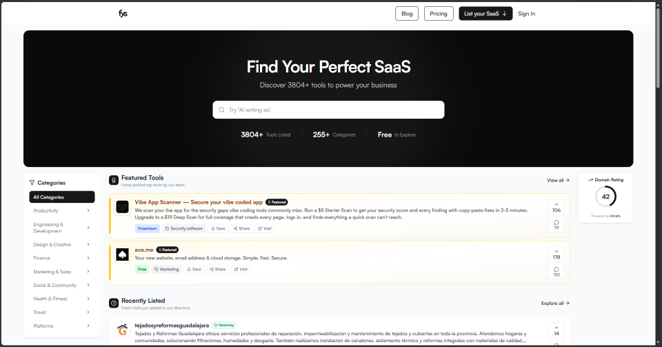
FindYourSaaS is built and run by John Kenn, a software developer who created the platform to make SaaS discovery easier. The site covers marketing automation, project management, productivity, and other software categories, with reviews and practical recommendations aimed at individuals and businesses. Its appeal is partly the product itself: this is a founder-developed discovery platform that continues to evolve, rather than a generic editorial brand assembled around search traffic.
Visit FindYourSaaS: https://findyoursaas.com/
34. Choosly
Why we picked them: A review checklist that includes privacy, setup, support, and limitations.
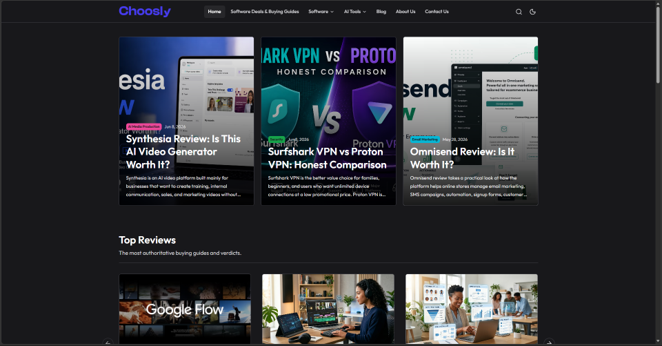
Choosly publishes independent software reviews using a broad evaluation checklist that goes beyond features. Its methodology can include ease of use, pricing, trials, security and privacy, support, integrations, performance, interface quality, setup, limitations, and alternatives. When access is available, the team creates accounts and works through dashboards and setup flows directly. That breadth matters because software disappointments often come from implementation and restrictions, not missing headline features.
Visit Choosly: https://choosly.net/
35. DrComps
Why we picked them: Head-to-head comparisons that actually name a winner.
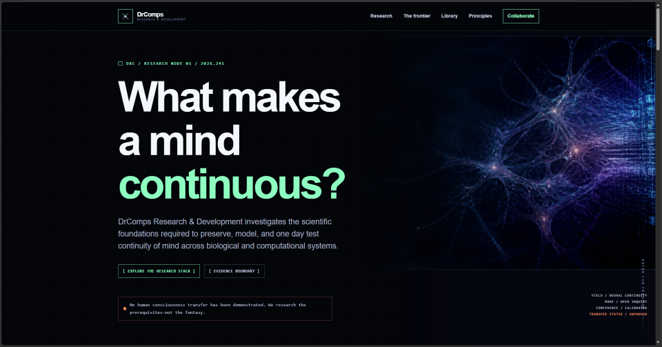
DrComps is designed for buyers who have already narrowed the field. Instead of padded top-20 lists, it compares real contenders and calls out pricing cliffs, seat minimums, missing integrations, reporting gaps, and administrative pain. The site explicitly promises to recommend a winner by use case and tell readers who should avoid it. Current coverage includes CRM, operations, payroll, accounting, marketing, and fleet software, with comparisons such as Samsara versus Motive.
Visit DrComps: https://drcomps.com/
36. Northstar Select
Why we picked them: Software buying guidance with free decision tools attached.
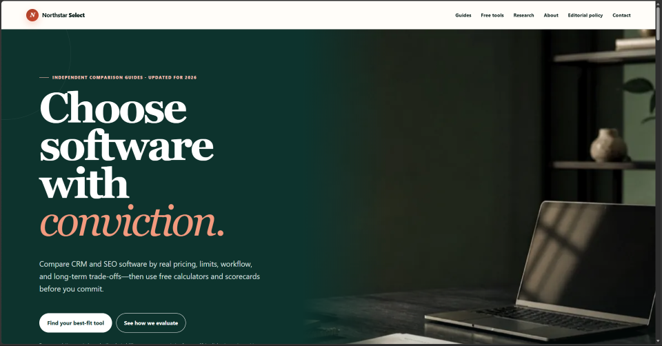
Northstar Select is published by RIA LLC in Okinawa, Japan, and serves creators, freelancers, remote professionals, and small teams. Alongside research-led comparisons, it builds free decision tools including CRM cost and ROI calculators, requirements checklists, migration templates, and scorecards. The tools process inputs in the browser and require no email gate. That combination of editorial guidance and reusable decision aids makes Northstar Select more useful than a publication that stops at a ranked list.
Visit Northstar Select: https://riaselect.com/
37. Compare Bazaar
Why we picked them: Former software buyers evaluating category-specific tradeoffs.
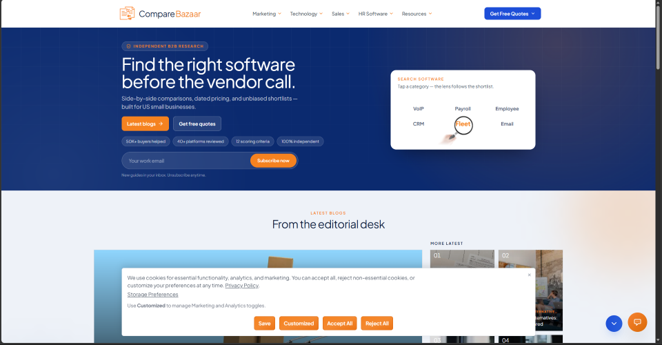
Compare Bazaar says its team includes former software buyers, consultants, and industry specialists. The publication scores products across 12 or more criteria, but adjusts the framework by category. Payroll tools, for example, are judged on tax compliance and contractor support, while CRM products are evaluated on pipeline management and automation. It also says pricing is verified directly with vendors and hidden fees are flagged. That category-specific methodology gives its business software comparisons practical depth.
Visit Compare Bazaar: https://www.compare-bazaar.com/
38. DigitalHustleBase
Why we picked them: Vertical AI coverage where domain fit matters more than hype.
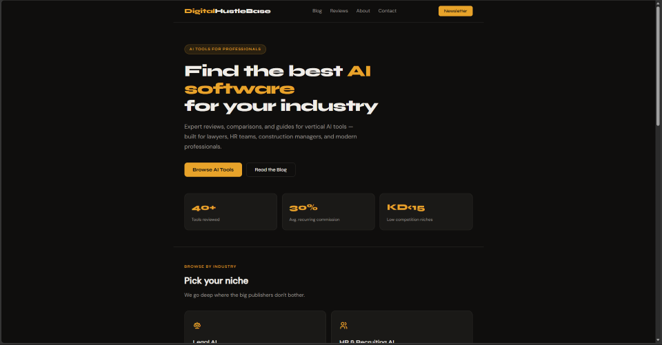
DigitalHustleBase deliberately avoids generic AI roundups and instead goes deep into professional categories such as legal, recruiting, construction, and healthcare AI. Its team says it tests products, compares pricing, and discloses commissions. That vertical approach is useful because a legal AI platform and a construction AI platform should not be judged with the same checklist. The publication's focus on domain-specific workflows makes its recommendations more relevant to professionals evaluating specialized software.
Visit DigitalHustleBase: https://digitalhustlebase.com/
39. Zomho
Why we picked them: Free-tier quality treated as a real scoring dimension.
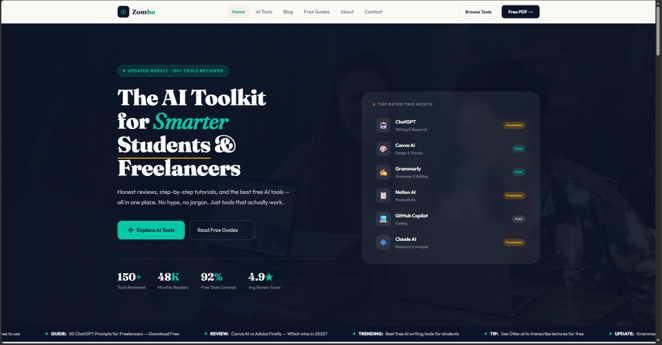
Zomho is built specifically for students and freelancers, and its scoring system reflects that audience. The site says it has reviewed more than 150 AI tools and rates products across six dimensions, including free-plan quality, student utility, and freelance value. It prioritizes free and low-cost options and says reviews are revisited every 90 days. That emphasis on affordability makes Zomho different from publications that treat a free plan as a footnote rather than a deciding factor.
Visit Zomho: https://zomho.com/
40. SaaS Software Reviews
Why we picked them: Sandra Roberts tests what happens after the honeymoon period.
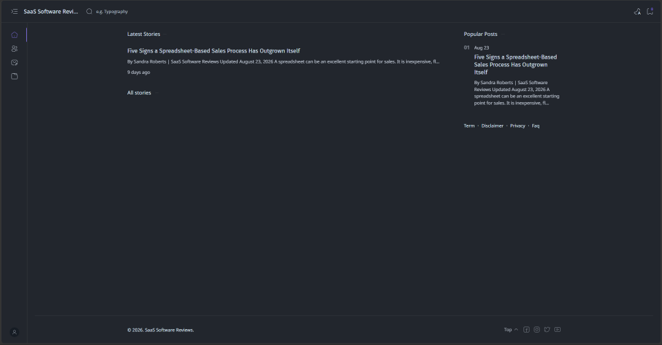
Sandra Roberts runs SaaS Software Reviews by herself, with no outsourced editorial team. Her premise is unusually specific: many tools look good during setup but reveal their weaknesses only after repeated use. Reviews therefore begin through the same public signup and onboarding flow a normal customer would use and continue across multiple sessions. Roberts focuses on support consistency, recurring workflows, and limitations that appear after a few days, which gives the publication a valuable long-term-use perspective.
Visit SaaS Software Reviews: https://www.saassoftwarereviews.com/
41. SG1 Labs
Why we picked them: A software studio that reviews from a builder's perspective.
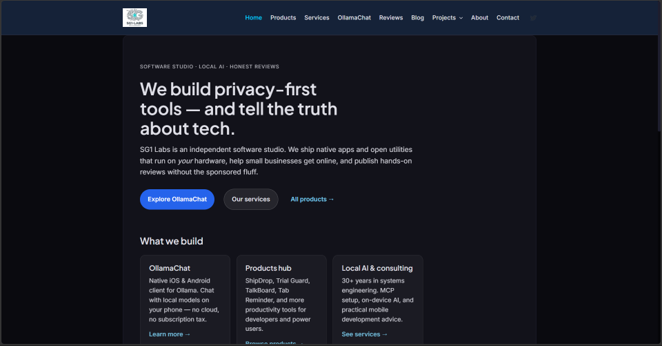
SG1 Labs is primarily an independent software studio, not a review factory. Its team describes more than 30 years of systems-engineering experience and builds privacy-first tools such as OllamaChat, a native client for local AI models. When the studio reviews software or hardware, it says it buys products itself and tests them in real use. That builder-first background gives its occasional reviews a technical perspective that is difficult to reproduce with surface-level feature comparisons.
Visit SG1 Labs: https://sg1-labs.us/
42. VantageLabs
Why we picked them: A practical lens on AI and productivity software.
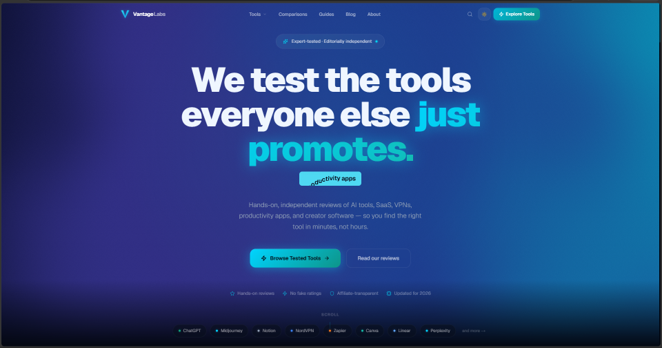
VantageLabs concentrates on the overlap between AI, SaaS, creator software, and productivity. That is a useful editorial territory because many new products no longer fit a single conventional category. The site's strongest role is discovery: surfacing tools and then explaining how they might fit into real creative or business workflows. We included VantageLabs because it represents the newer generation of independent publications tracking software as AI features spread across the rest of the stack.
Visit VantageLabs: https://www.vantagelabsai.com/
43. AI Tools Digest
Why we picked them: A specialist publication for an overcrowded AI market.
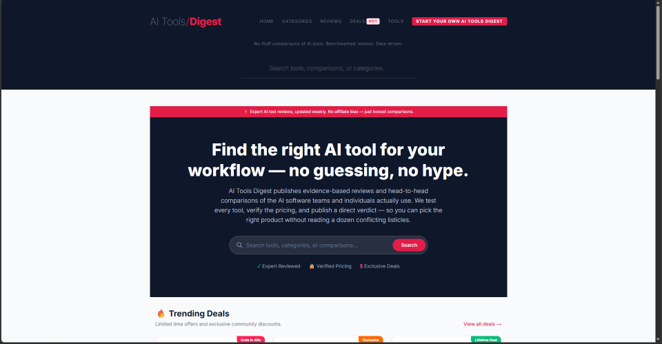
AI Tools Digest focuses on reviews and comparisons of AI-powered software, where the sheer volume of new launches makes specialist filtering valuable. Rather than treating AI as a news topic, the site approaches it as a software-buying problem: what the product does, which alternative it competes with, and whether the subscription is justified. That narrower remit gives readers a dedicated place to research AI tools without wading through broader technology coverage.
Visit AI Tools Digest: https://www.aitoolsdigest.com/
44. AI Hub Advisor
Why we picked them: AI reviews organized around business and creative use cases.
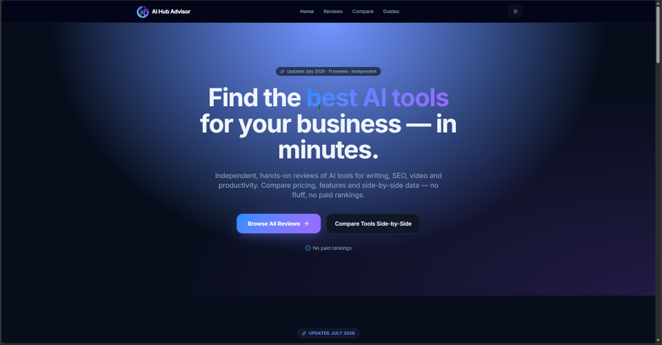
AI Hub Advisor covers products used in business, SEO, video, productivity, and other AI-assisted workflows. Its value is the use-case orientation. A video generator, SEO assistant, and productivity copilot may all use AI, but they solve very different problems and need different evaluation criteria. By organizing discovery around the job the reader is trying to accomplish, AI Hub Advisor provides a more practical route into the crowded AI software market.
Visit AI Hub Advisor: https://aihubadvisor.com/
45. SaaSIndex
Why we picked them: A SaaS-focused resource for fast-moving software categories.
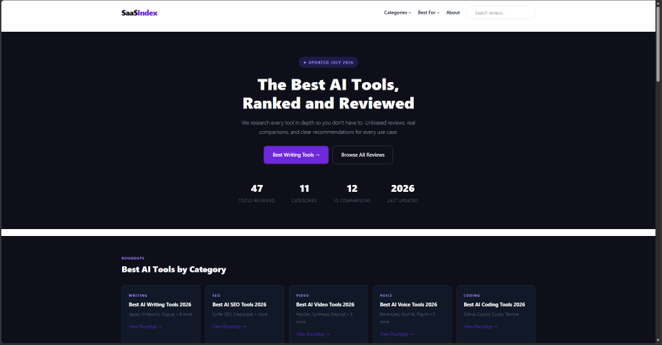
SaaSIndex concentrates on software categories where products and pricing move quickly, including AI writing, SEO, and productivity. Its SaaS-first focus gives readers an alternative to general technology sites that only occasionally review business software. We included it because category-focused publications can be especially useful during the shortlist stage, when buyers need comparisons and alternatives rather than broad technology commentary.
Visit SaaSIndex: https://saasindex.net/
46. SaaS Odds
Why we picked them: A consistent independent voice across SaaS categories.
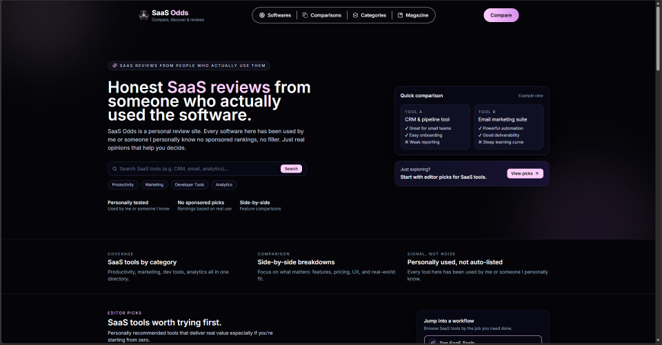
SaaS Odds brings a personal-review format to productivity, marketing, developer tools, and other SaaS categories. That consistency matters. On a small publication, readers can learn the reviewer's standards and preferences over time instead of encountering a different contributor and scoring philosophy on every page. Its place on this list reflects the value of independent voices that treat software evaluation as an ongoing editorial practice rather than a one-off affiliate roundup.
Visit SaaS Odds: https://www.saasodds.com/
47. StackJudge
Why we picked them: Technical software analysis for readers who care about implementation.
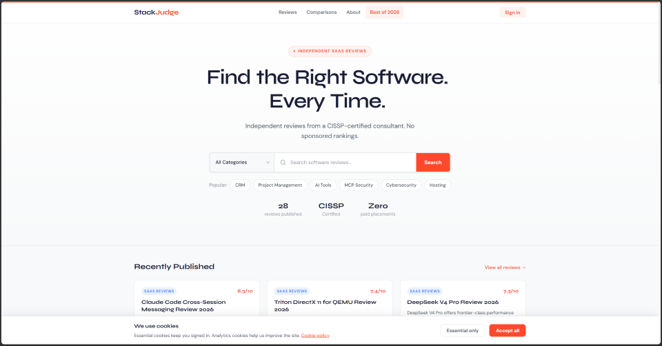
StackJudge approaches SaaS and AI products from a technical perspective, with attention to workflow fit, integrations, implementation, and the practical realities behind a polished interface. That makes it particularly relevant for technical buyers and teams where software must connect to an existing stack. We included StackJudge because professional software often fails in the details, and publications willing to examine those details provide a useful counterweight to purely consumer-style reviews.
Visit StackJudge: https://stackjudge.io/
48. Tekanology
Why we picked them: Coverage at the intersection of automation, AI, and daily work.
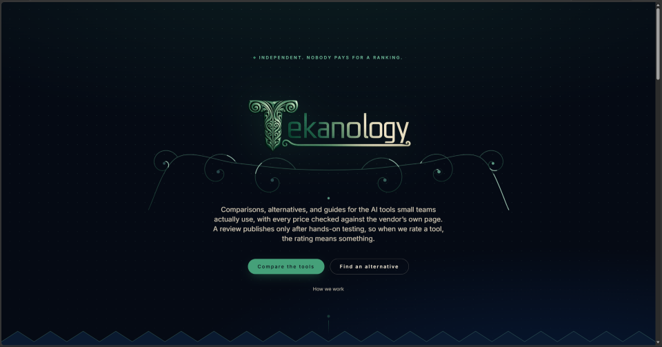
Tekanology follows the convergence of AI, automation, and productivity software. That overlap has become increasingly important as conventional SaaS products add AI features and automation platforms become more capable. Rather than treating artificial intelligence as a separate universe, the publication looks at tools in the context of getting work done. That practical framing makes Tekanology a useful discovery source for professionals building more automated workflows.
Visit Tekanology: https://www.tekanology.com/
49. Apps Tested
Why we picked them: Specialist editors, 14-day minimum tests, and a transparent five-part scoring system.
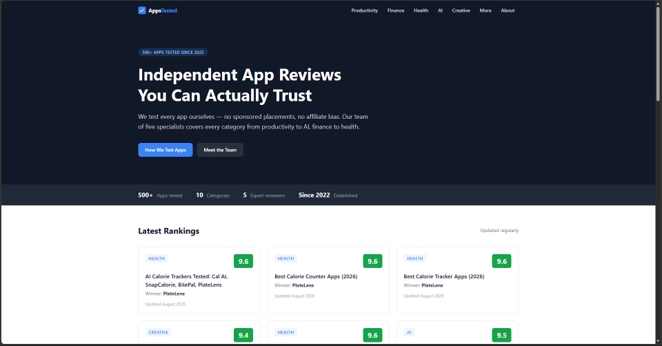
Apps Tested was founded in 2022 by Mark Sullivan after 12 years covering software and consumer technology. The publication says it has independently tested more than 500 apps across 10 categories, with every ranked product used by a category specialist for at least two weeks. Its five-part scoring model covers UX and design, feature depth, performance and reliability, value, and support. The site also rejects paid placement and affiliate links, which makes its testing model unusually easy to understand.
Visit Apps Tested: https://appstested.com/
50. ChoiceSift
Why we picked them: Controlled comparisons that show the evidence and keep conclusions within the scope of the test.
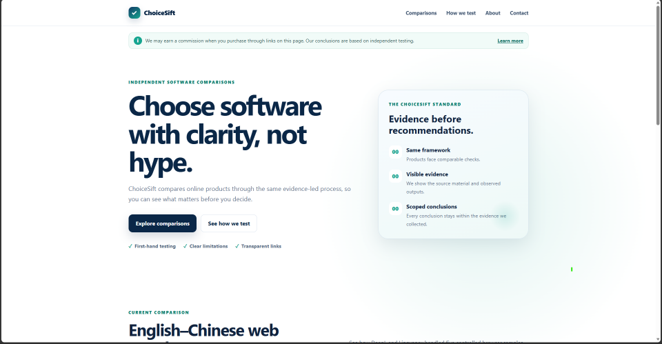
ChoiceSift takes a deliberately narrow, evidence-led approach to software comparison. Its process is published clearly: select products that can be verified, register or purchase access under real conditions, test competitors with comparable inputs, document the outputs, and limit the final conclusion to what the evidence actually supports. Its current DeepL versus Lingvanex comparison, for example, shows the browser-translation samples used in the test rather than hiding the evidence behind a score. That restraint is exactly what makes the site interesting.
Visit ChoiceSift: https://choicesift.com/
What We Looked For
We did not require every publication to use the same review model. In fact, the differences are part of what makes this list interesting.
Some winners conduct long hands-on tests. Others combine product access with documentation, pricing research, verified user feedback, or category expertise. Several publish formal scoring rubrics. Others stand out because a named founder brings years of operating, technical, or industry experience to the review.
What mattered was evidence of an editorial point of view. We looked for publications that help readers understand tradeoffs, not simply repeat what a vendor says its product can do.
We also favored transparency. Sites that clearly distinguish hands-on testing from documentation-based research, disclose affiliate relationships, explain how scores are calculated, or publish correction policies make it easier for readers to judge the review itself.
Why Independent Software Reviewers Matter
Software buying has become harder as the market has become larger. AI has accelerated that problem. New products can launch, change pricing, add major features, or disappear in the time it takes an old comparison article to reach the top of search results.
Independent reviewers can fill gaps that large publications cannot always cover. A solo writer can specialize in New Zealand business software. A small team can evaluate whether an AI tool works for therapists. Another publication can spend two weeks testing a product that would receive a few paragraphs elsewhere.
That does not mean every independent review is automatically trustworthy. It means the independent web gives readers more perspectives, more specialized expertise, and more opportunities to find reviewers whose priorities match their own.
Congratulations to the 2026 Winners
To every publication featured here, congratulations.
Good software reviewing is harder than it looks. It requires time inside the product, attention to pricing and limitations, enough category knowledge to understand the alternatives, and the willingness to tell readers when a popular product is not the right choice.
Whether you are a solo publisher, a small editorial team, a software builder who occasionally reviews the tools you use, or a specialist publication devoted to one category, your work makes the software market easier to navigate.
Know an independent software review publication that deserves consideration for a future edition? We would be happy to hear about it.
Editorial Note
Publication details and review methodologies were researched from the publications' own websites and current editorial or methodology pages in August and September 2026. Software publications change quickly, so readers should always check the linked site for its latest policies, authors, and coverage.
Peter
Founder of PDFHaul and Bultech
Building tools that make working with documents faster and simpler.