How to Convert Images to PDF: Complete Guide
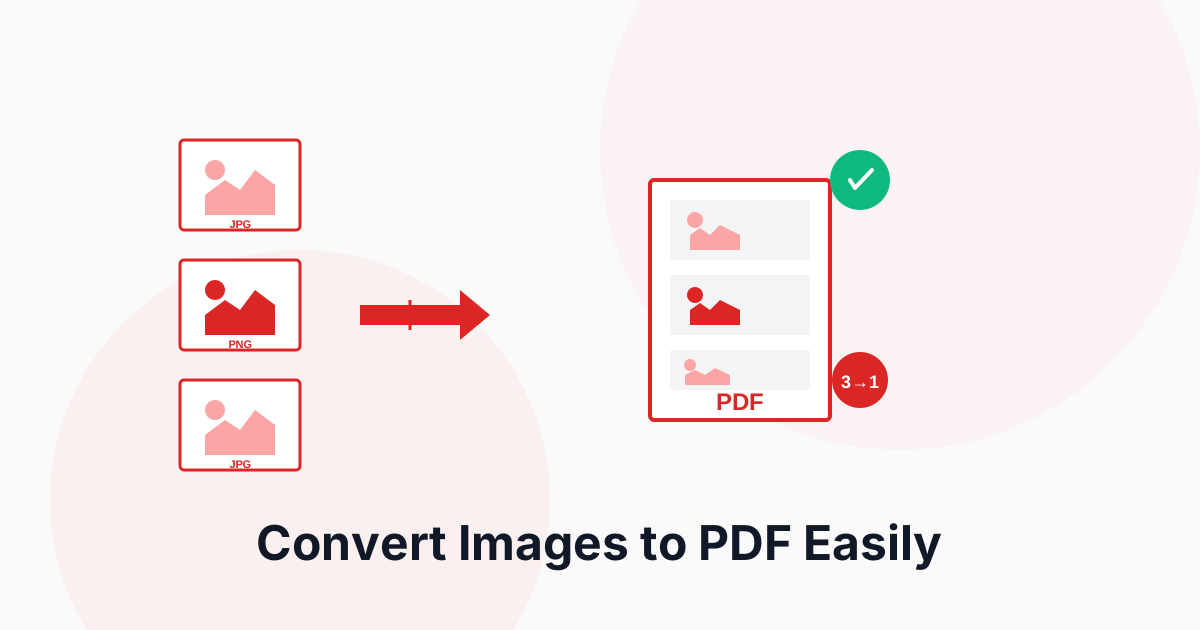
Converting images to PDF format is essential for creating professional documents, combining multiple photos into portfolios, sharing scanned documents, and ensuring universal file compatibility. Whether you're creating presentations, archiving photos, or preparing documents for submission, understanding image to PDF conversion ensures optimal results.
This comprehensive guide covers everything from single-image conversion to advanced multi-image PDF creation with custom layouts and quality optimization.
Why Convert Images to PDF?
Image to PDF conversion solves multiple document management challenges:
- Universal compatibility: PDFs open on any device without special software
- Multi-image documents: Combine multiple photos into single files
- Professional presentation: Create polished portfolios and reports
- File organization: Group related images logically
- Prevent editing: PDF format protects image content
- Consistent formatting: Maintain layout across platforms
- Smaller file sizes: Compress multiple images efficiently
- Easy sharing: Single file instead of multiple attachments
- Print-ready documents: Professional printing without quality loss
PDFs created from images maintain original quality while providing better organization and universal accessibility than individual image files.
Understanding Image Formats
Source Image Formats
JPG/JPEG
- Most common photo format
- Compressed files with smaller sizes
- Great for photographs
- Lossy compression
- Excellent for web and email
PNG
- Lossless compression
- Supports transparency
- Ideal for graphics and logos
- Larger file sizes
- Perfect for diagrams and screenshots
TIFF
- Uncompressed high-quality format
- Professional photography standard
- Very large file sizes
- Excellent for archival
- Best for professional printing
HEIC/HEIF
- Modern iPhone photo format
- Efficient compression
- Smaller than JPG with better quality
- Limited compatibility
- Convert to PDF for universal access
WebP
- Modern web format
- Excellent compression
- Not universally supported
- Convert to PDF for sharing
How to Convert Images to PDF with PDFHaul
PDFHaul makes image to PDF conversion simple and flexible. Watch this demonstration:
Step 1: Upload Your Images
Visit the Image to PDF tool and upload your images. PDFHaul supports:
- JPG, PNG, TIFF, HEIC, WebP, and more
- Files up to 100MB total
- Multiple images simultaneously
- Drag-and-drop interface
- Batch uploads
Step 2: Arrange Your Images
Organize images in your desired order:
Drag and Drop Reordering
- Click and drag thumbnails
- Rearrange page sequence
- Preview order before conversion
- Perfect control over layout
Add More Images
- Insert additional images anytime
- Combine from multiple folders
- Mix different image formats
- Build comprehensive documents
Remove Images
- Delete unwanted images
- Refine selection
- Optimize final document
- Quick adjustments
Preview your image order carefully—the sequence determines the final PDF page order.
Step 3: Configure PDF Settings
Customize your PDF output:
Page Orientation
- Auto: Matches each image orientation
- Portrait: Vertical layout (best for photos)
- Landscape: Horizontal layout (best for wide images)
Page Size
- A4: Standard document size
- Letter: US standard
- Custom: Match specific dimensions
- Fit to Image: Preserve original dimensions
Image Quality
- Standard: Balanced size and quality
- High: Better quality, larger files
- Maximum: No compression, largest files
- Optimized: Smart compression for web
Margins
- None: Full-bleed images
- Small: Minimal white space
- Medium: Standard document margins
- Large: Wide borders for binding
Step 4: Convert and Download
Click "Create PDF" and download your document. PDFHaul provides:
- Instant conversion
- Original quality preservation
- Optimized file sizes
- Ready-to-share PDFs
Advanced Conversion Techniques
Multi-Image PDF Creation
Combine multiple images professionally:
Photo Portfolios
- Upload 10-50 images
- Arrange in presentation order
- Use landscape orientation
- Add cover image first
- Create stunning visual documents
Scanned Document Assembly
- Upload scanned pages in order
- Ensure consistent orientation
- Use portrait layout
- Apply moderate compression
- Recreate complete documents
Product Catalogs
- One product image per page
- Consistent sizing and margins
- Logical product sequence
- Professional presentation
- Easy customer sharing
Report Illustration
- Mix charts, graphs, and images
- Organize by report section
- Maintain visual hierarchy
- Support narrative flow
- Create comprehensive visual reports
Image Quality Optimization
Maximize PDF quality for specific needs:
High-Resolution Printing
- Use maximum quality settings
- Maintain original image dimensions
- Choose TIFF sources when available
- Avoid compression
- Export at 300+ DPI equivalent
Web Sharing
- Use optimized quality setting
- Resize large images before upload
- Apply moderate compression
- Target 1-5 MB file size
- Fast download and viewing
Email Attachments
- Use standard quality
- Compress to under 10 MB
- Resize images to reasonable dimensions
- Balance quality and size
- Ensure deliverability
Archival Storage
- Maximum quality preservation
- No compression
- Original dimensions
- TIFF source preferred
- Long-term accessibility
For professional results, use original high-resolution images and choose quality settings appropriate to your end use.
Page Layout Strategies
Single Image Per Page
- Traditional document format
- One image fills each page
- Easy navigation
- Clear presentation
- Most common approach
Multiple Images Per Page
- Grid layouts (2×2, 3×3)
- Comparison views
- Contact sheets
- Space-efficient
- Overview presentations
Mixed Layouts
- Cover page followed by content
- Title pages between sections
- Variable image sizes
- Custom arrangements
- Professional publications
Conversion Best Practices by Use Case
Photo Albums
For family photos, events, travel:
- Organization: Chronological or by theme
- Orientation: Auto-detect for mixed photos
- Quality: High for preservation
- Size: A4 or Letter for printing
- Margins: Small to medium for framing
- Tip: Add cover image with album title
Business Documents
For invoices, receipts, forms:
- Organization: Logical document order
- Orientation: Portrait for most documents
- Quality: Standard for file size efficiency
- Size: Letter or A4 standard
- Margins: Medium for professional appearance
- Tip: Ensure text remains legible
Real Estate Listings
For property photos:
- Organization: Exterior first, then room-by-room
- Orientation: Landscape for most photos
- Quality: High to showcase property
- Size: A4 landscape
- Margins: None for full-bleed impact
- Tip: Lead with best exterior shot
Academic Submissions
For assignments, research:
- Organization: Follow assignment requirements
- Orientation: Portrait for standard pages
- Quality: High for diagrams and charts
- Size: Letter or A4 as specified
- Margins: Medium to large for annotations
- Tip: Number pages if required
Design Portfolios
For creative work, presentations:
- Organization: Best work first
- Orientation: Match artwork orientation
- Quality: Maximum for detail showcase
- Size: Custom to preserve dimensions
- Margins: Minimal or none
- Tip: Consistent image dimensions throughout
Common Conversion Scenarios
Scenario 1: Combine Phone Photos into Album
Problem: 50 vacation photos need organizing into shareable album Solution:
- Upload all photos at once
- Arrange chronologically by date
- Use auto orientation
- High quality for future printing
- Create memorable photo book PDF
Scenario 2: Create Presentation from Screenshots
Problem: 15 screenshots need combining into presentation Solution:
- Upload screenshots in sequence
- Use landscape orientation
- Standard quality for file size
- Add title screenshot first
- Professional presentation ready
Scenario 3: Digitize Paper Documents
Problem: Scanned contract pages need reassembly Solution:
- Scan pages as JPG images
- Upload in correct page order
- Portrait orientation
- High quality for legibility
- Recreate original document
Scenario 4: Share Product Images
Problem: Client needs all product photos in one file Solution:
- Upload product photos
- One image per page
- Landscape for better viewing
- Optimize quality for email
- Single-file delivery
Scenario 5: Create Before/After Comparison
Problem: Show renovation progress in document Solution:
- Alternate before and after images
- Consistent orientation
- High quality for detail
- A4 size for printing
- Visual transformation story
File Size Management
Understanding and controlling PDF output sizes:
Factors Affecting File Size
Image Resolution
- Original image dimensions
- Higher resolution = larger files
- Resize before upload if possible
- Consider final use case
Image Format
- TIFF creates largest PDFs
- PNG larger than JPG
- JPG most efficient for photos
- Format impacts final size
Number of Images
- More images = larger PDF
- 10 high-res images ≈ 20-50 MB
- Consider splitting into multiple PDFs
- Balance comprehensiveness and size
Quality Settings
- Maximum quality: Largest files
- Optimized: 50-70% size reduction
- Standard: 70-80% reduction
- Balance quality and size needs
Reducing File Size
Before Upload
- Resize images to actual needs (e.g., 1920px width)
- Convert TIFF to JPG for photos
- Crop unnecessary portions
- Remove duplicate images
During Conversion
- Use optimized quality setting
- Apply compression appropriately
- Choose standard page sizes
- Avoid maximum quality unless essential
After Conversion
- Further compress PDF if needed
- Use PDFHaul compression tool
- Optimize for specific distribution
- Test file sharing compatibility
Avoid converting already-compressed images at maximum quality—it creates unnecessarily large files without quality improvement.
Troubleshooting Conversion Issues
Images Appear Rotated Incorrectly
If images display sideways or upside down:
- Check image EXIF orientation data
- Rotate images before upload
- Use image editing software to fix
- Verify preview before conversion
Solution: Pre-rotate images in photo editor to correct orientation.
Image Quality Looks Poor
If converted images lack clarity:
- Check original image resolution
- Use higher quality settings
- Avoid re-compressing compressed images
- Upload original files when possible
Solution: Use original high-resolution images and high quality settings.
PDF File Size Too Large
If output PDF is excessively large:
- Resize images before upload
- Use optimized quality setting
- Convert fewer images per PDF
- Compress PDF after creation
Solution: Resize images to 1920×1080 or similar before uploading.
Images Don't Fit Page Properly
If images are cropped or distorted:
- Use "Fit to Image" page size option
- Match orientation to image
- Check aspect ratio settings
- Adjust margin settings
Solution: Use auto orientation and fit-to-image sizing.
Conversion Fails
If process won't complete:
- Check total file size under 100 MB
- Verify image formats supported
- Try uploading fewer images
- Refresh and try again
Solution: Upload images in smaller batches or compress images first.
Security and Privacy
Important security considerations:
Metadata Preservation
- EXIF data from photos included in PDF
- Location, date, camera info embedded
- Remove sensitive metadata before upload
- Use metadata cleaning tools if needed
Copyright Protection
- PDFs easier to share than controlling multiple images
- Consider watermarking valuable images
- Add copyright notice as first page
- Protect intellectual property
Password Protection
- PDFHaul supports adding passwords after creation
- Restrict editing and printing
- Control document access
- Protect sensitive image content
PDFHaul processes images securely and doesn't store your files. All uploads are temporary and automatically deleted after processing.
Combining with Other Operations
Maximize efficiency by combining conversion with other tools:
Convert + Compress
- Convert images to PDF
- Compress PDF to reduce size
- Optimize for specific use
- Perfect for email sharing
Convert + Merge
- Convert image sets to separate PDFs
- Merge PDFs into master document
- Organize comprehensive collection
- Create multi-section portfolios
Convert + Password Protect
- Convert sensitive images to PDF
- Apply password protection
- Restrict unauthorized access
- Secure document sharing
Mobile vs Desktop Conversion
Desktop Conversion
Advantages:
- Easier to organize many images
- Better preview capabilities
- Precise drag-and-drop reordering
- Larger workspace for complex documents
Mobile Conversion
Advantages:
- Convert photos directly from camera
- Immediate processing on-the-go
- Quick document creation
- PDFHaul fully mobile-responsive
PDFHaul works seamlessly on all devices, providing full image to PDF functionality whether you're on desktop, tablet, or mobile.
Creative Use Cases
Innovative applications for image to PDF conversion:
Recipe Collections
- Photograph recipe cards
- Convert to searchable PDF cookbook
- Organize by meal type
- Digital recipe preservation
Instruction Manuals
- Photograph manual pages
- Convert to portable PDF
- Easier than scanning
- Quick reference documents
Whiteboard Capture
- Photo whiteboard sessions
- Convert to meeting notes PDF
- Share with team
- Archive brainstorming
Art Portfolio
- Photograph artwork
- Create professional portfolio PDF
- Share with galleries
- Submission-ready format
Real Estate Flyers
- Design flyer in image editor
- Convert to PDF for printing
- Maintain design integrity
- Professional marketing materials
When NOT to Convert
Avoid conversion in these situations:
- Need transparent backgrounds: PDFs may flatten transparency
- Require image editing: Keep as images for editing flexibility
- File size critical: Individual compressed images often smaller
- Social media posting: Platforms prefer native image formats
- Thumbnail generation: Images better for automated thumbnails
- Responsive web design: Images better for responsive layouts
Conclusion
Converting images to PDF is a powerful document management skill that enables better organization, sharing, and preservation of visual content. With the right settings and techniques, you can create professional PDFs for any purpose while maintaining quality and controlling file sizes.
Key Takeaways:
- Upload original high-resolution images for best results
- Arrange images carefully before conversion
- Choose quality settings based on end use
- Use appropriate page orientation and sizing
- Compress after conversion if needed
Ready to convert your images to PDF? Try PDFHaul's conversion tool now - free, fast, and professional quality.
Stay Updated
Get the latest PDF tips, tricks, and tutorials delivered to your inbox.
No spam. Unsubscribe anytime.
Frequently Asked Questions
Q: Does converting images to PDF reduce quality?
A: No, with proper quality settings your images maintain their original quality. Use high or maximum quality for best results.
Q: How many images can I convert to PDF at once?
A: PDFHaul supports converting multiple images up to 100MB total file size, typically 50-200 images depending on resolution.
Q: Can I convert iPhone HEIC photos to PDF?
A: Yes, PDFHaul supports HEIC format and converts it seamlessly to PDF along with JPG, PNG, and other formats.
Q: Will the PDF maintain my image arrangement order?
A: Yes, images appear in the PDF exactly as you arrange them in the upload interface.
Q: Can I add more images after starting the conversion?
A: You can add more images before clicking "Create PDF." Once conversion starts, you'll need to create a new PDF to add more.
Q: What's the best page size for converting photos to PDF?
A: Use "Fit to Image" to preserve original dimensions, or A4/Letter for standard printing. Choose based on your intended use.
Written by PDFHaul Team
Expert team specializing in PDF processing and document management. We share practical tips, tutorials, and best practices to help you work smarter with PDFs.
View all articles