How to Convert PDF to Image: Complete Guide
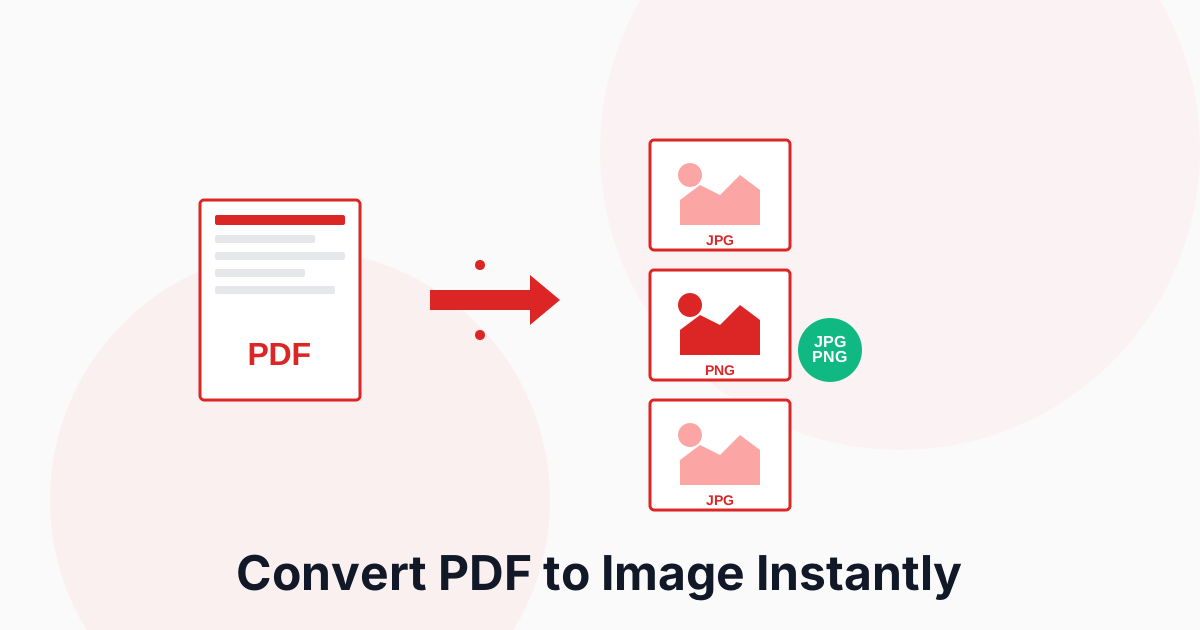
Converting PDF documents to image formats is essential for sharing content on social media, creating presentations, extracting diagrams, and making PDFs accessible in image-based workflows. Whether you need high-resolution images for printing or web-optimized files for online sharing, understanding PDF to image conversion ensures optimal results.
This comprehensive guide covers everything from basic single-page conversion to advanced batch processing techniques for professional PDF to image extraction.
Why Convert PDF to Image?
PDF to image conversion solves multiple content management challenges:
- Social media sharing: Post PDF content as images on platforms that don't support PDFs
- Presentation integration: Insert PDF pages into PowerPoint, Keynote, or Google Slides
- Email compatibility: Send images instead of PDFs for better mobile viewing
- Web publishing: Display PDF content on websites without PDF viewers
- Screenshot replacement: Extract high-quality images instead of taking screenshots
- Printing flexibility: Print specific pages as images with custom sizing
- Editing capabilities: Edit PDF content in image editing software
- Accessibility: Make content available in universally supported formats
Converting PDFs to images creates standalone files that can be viewed on any device without PDF reader software.
Understanding Image Formats
JPG (JPEG)
Best for: Photographs, complex graphics, web use
Advantages:
- Smaller file sizes through compression
- Universally supported across all platforms
- Ideal for photos and images with gradients
- Perfect for web publishing and email
Disadvantages:
- Lossy compression (quality degradation)
- No transparency support
- Not ideal for text-heavy documents
- Quality loss with repeated editing
PNG
Best for: Text documents, diagrams, graphics with transparency
Advantages:
- Lossless compression (no quality loss)
- Supports transparency (alpha channel)
- Excellent for text and sharp edges
- Perfect for logos and diagrams
Disadvantages:
- Larger file sizes than JPG
- Less efficient for photographs
- Not ideal for very large images
- Higher storage requirements
TIFF
Best for: Archival, printing, professional workflows
Advantages:
- Highest quality preservation
- Supports multiple pages in one file
- Industry standard for archival
- Excellent for professional printing
Disadvantages:
- Very large file sizes
- Limited web browser support
- Requires specialized software
- Not suitable for online sharing
How to Convert PDF to Image with PDFHaul
PDFHaul makes PDF to image conversion simple and flexible. Watch this demonstration:
Step 1: Upload Your PDF
Visit the PDF to Image tool and upload your document. PDFHaul supports:
- Files up to 100MB
- Multi-page documents
- All PDF versions and formats
- Scanned and digital PDFs
Step 2: Select Pages to Convert
Choose which pages to extract as images:
All Pages
- Convert entire document to images
- One image file per page
- Maintains page order
- Perfect for complete conversion
Specific Pages
- Select individual pages (e.g., 1, 5, 10)
- Choose page ranges (e.g., 3-8)
- Extract non-consecutive pages
- Ideal for selective conversion
Current Page Only
- Convert single page quickly
- Preview and convert
- Fast extraction
- Perfect for one-off needs
Use page preview to verify you're converting the correct pages before processing.
Step 3: Choose Image Format and Quality
Select output format and quality settings:
Format Options
- JPG: Best for photos and web use (smaller files)
- PNG: Best for text and transparency (higher quality)
Quality Settings
- Standard (72 DPI): Web and screen viewing
- High (150 DPI): Presentations and basic printing
- Print (300 DPI): Professional printing and archival
- Maximum (600 DPI): Large format printing and scanning
Step 4: Download Your Images
Click "Convert to Image" and download your files. PDFHaul provides:
- Individual image downloads
- ZIP archive for multiple pages
- Original page numbering in filenames
- Instant processing
Advanced Conversion Techniques
DPI and Resolution Guide
Understanding resolution for different use cases:
72 DPI (Web Standard)
- Screen viewing and web publishing
- Email attachments
- Social media posts
- Smallest file sizes
- Fast loading times
150 DPI (Enhanced Quality)
- PowerPoint presentations
- Basic printing needs
- Document sharing
- Balanced size and quality
300 DPI (Print Standard)
- Professional printing
- Marketing materials
- High-quality documents
- Detailed graphics
- Recommended for most uses
600+ DPI (Archival)
- Large format printing
- Professional photography
- Detailed technical drawings
- Maximum quality preservation
- Very large file sizes
For most use cases, 300 DPI provides the best balance between quality and file size.
Batch Conversion Workflows
Convert multiple PDFs efficiently:
Consistent Settings
- Upload multiple PDF files
- Apply same format and quality settings
- Process all files simultaneously
- Download as organized ZIP archive
Mixed Requirements
- Group PDFs by output requirements
- Convert web-optimized batch at 72 DPI JPG
- Convert print batch at 300 DPI PNG
- Organize by use case
Automated Naming
- Files named by source: Report_Page_1.jpg, Report_Page_2.jpg
- Sequential numbering maintained
- Easy organization and sorting
- Consistent file structure
Quality Optimization Tips
Maximize image quality for specific needs:
Text Documents
- Use PNG format for sharp text
- 300 DPI minimum for clarity
- Avoid JPG for text-heavy content
- Consider black and white for contracts
Photos and Graphics
- JPG format acceptable for photographs
- 150-300 DPI for most uses
- PNG for images with transparency
- Higher DPI for enlargement needs
Mixed Content
- PNG for documents with both text and images
- 300 DPI for versatility
- Evaluate each page individually
- Use preview to verify quality
Conversion Best Practices by Use Case
Social Media Sharing
For Instagram, Facebook, Twitter, LinkedIn:
- Format: JPG
- DPI: 72-150 DPI
- Size: Optimize for platform (1080px width for Instagram)
- Compression: Medium quality acceptable
- Tip: Crop to highlight key content
Presentations
For PowerPoint, Keynote, Google Slides:
- Format: PNG (for transparency) or JPG
- DPI: 150 DPI
- Size: Match slide dimensions (1920×1080 for HD)
- Quality: High quality for projection
- Tip: Extract diagrams separately
Web Publishing
For blogs, websites, documentation:
- Format: JPG for photos, PNG for graphics
- DPI: 72-96 DPI
- Size: Optimize for web (max 1200px width)
- Compression: Balance quality and loading speed
- Tip: Use responsive image sizing
Printing
For physical prints, marketing materials:
- Format: PNG
- DPI: 300-600 DPI
- Size: Match final print size
- Quality: Maximum for professional results
- Tip: Account for bleed and margins
Email Attachments
For sharing via email:
- Format: JPG for smaller size
- DPI: 96-150 DPI
- Size: Keep total under 5MB
- Compression: Medium quality
- Tip: Resize if needed for email limits
Common Conversion Scenarios
Scenario 1: Extract Diagram from Technical Manual
Problem: Need high-quality diagram from page 47 of 200-page manual Solution:
- Select page 47 only
- Convert to PNG at 300 DPI
- Maintains clarity and detail
- Import into design software
Scenario 2: Share Report on Social Media
Problem: Want to share key findings from PDF report on LinkedIn Solution:
- Extract summary page
- Convert to JPG at 150 DPI
- Optimize for 1200px width
- Post as image with caption
Scenario 3: Create Presentation Slides
Problem: Need to incorporate PDF pages into PowerPoint Solution:
- Convert relevant pages to PNG at 150 DPI
- Maintains transparency if needed
- Insert into slides as images
- Edit and annotate in PowerPoint
Scenario 4: Print Individual Pages
Problem: Need to print selected pages from digital document Solution:
- Extract pages as PNG at 300 DPI
- Open in image viewer
- Print with custom sizing
- Better control than PDF printing
Scenario 5: Create Thumbnail Gallery
Problem: Need thumbnail images for PDF document library Solution:
- Convert first page of each PDF
- Use JPG at 72 DPI
- Resize to thumbnail dimensions
- Create visual document browser
File Size Management
Understanding and controlling output file sizes:
Factors Affecting File Size
Resolution (DPI)
- 72 DPI: 1-2 MB per page typical
- 150 DPI: 3-5 MB per page typical
- 300 DPI: 8-15 MB per page typical
- 600 DPI: 25-50 MB per page typical
Format Choice
- JPG: 50-80% smaller than PNG
- PNG: Larger but lossless
Content Complexity
- Simple text: Smaller files
- Complex graphics: Larger files
- Photographs: Variable depending on format
- Mixed content: Medium to large
Reducing File Size
Without Quality Loss
- Use JPG for photographs
- Use PNG only when transparency needed
- Choose appropriate DPI for use case
- Crop unnecessary margins
With Acceptable Quality Trade-off
- Reduce DPI to 72-96 for web use
- Apply moderate JPG compression
- Convert color to grayscale if appropriate
- Resize dimensions to actual needs
Avoid repeatedly converting and saving images as JPG—quality degrades with each save. Convert once and keep the original.
Troubleshooting Conversion Issues
Images Look Blurry or Pixelated
If converted images lack clarity:
- Increase DPI setting (try 300 DPI)
- Switch from JPG to PNG format
- Check source PDF quality
- Verify PDF isn't low-resolution scan
Solution: Use higher DPI and PNG format for text-heavy documents.
File Sizes Too Large
If images are excessively large:
- Reduce DPI to minimum needed for use case
- Use JPG instead of PNG for photos
- Check if resolution is higher than necessary
- Consider resizing image dimensions
Solution: Match DPI to actual use case—don't use 300 DPI for web viewing.
Colors Look Different
If colors don't match PDF:
- Check color profile settings
- Verify RGB vs CMYK mode
- Look for color management options
- Compare in consistent lighting
Solution: Use PNG format and ensure color profiles are embedded.
Transparent Backgrounds Become White
If transparency is lost:
- PDF may not contain true transparency
- JPG format doesn't support transparency
- White background may be part of PDF
Solution: Use PNG format and verify PDF actually contains transparency layers.
Conversion Fails
If conversion won't complete:
- Check PDF isn't password-protected
- Verify file isn't corrupted
- Ensure file size under limit
- Try uploading again
Solution: Remove password protection or repair PDF before conversion.
Security and Privacy
Important security considerations:
Metadata Removal
- Image files may retain PDF metadata
- Author, creation date, software info included
- Remove sensitive metadata before sharing
- Use metadata cleaning tools if needed
Content Extraction
- Anyone with image can view content
- No password protection on images
- Consider watermarking sensitive content
- Review before public sharing
Original PDF Security
- Converting bypasses PDF encryption
- Images don't inherit PDF restrictions
- Be mindful of copyright and permissions
- Respect document access controls
PDFHaul processes conversions securely and doesn't store your files. All uploads and conversions are temporary and automatically deleted.
Combining with Other Operations
Maximize efficiency by combining conversion with other tools:
Convert + Compress
- Convert PDF pages to images
- Compress images for web use
- Optimize file sizes further
- Perfect for online publishing
Split + Convert
- Split PDF into sections
- Convert each section to images
- Organize by topic or chapter
- Create image-based documentation
Rotate + Convert
- Fix page orientation in PDF
- Convert rotated pages to images
- Ensure correct image orientation
- Avoid rotated image files
Mobile vs Desktop Conversion
Desktop Conversion
Advantages:
- Larger preview screens
- Easier quality comparison
- Better for batch processing
- More precise settings control
Mobile Conversion
Advantages:
- Convert on-the-go
- Quick single-page extraction
- Immediate sharing to social media
- PDFHaul mobile-friendly interface
PDFHaul works seamlessly on all devices, providing full conversion functionality whether you're on desktop, tablet, or mobile.
Alternative Use Cases
Creative uses for PDF to image conversion:
Create Digital Flashcards
- Convert textbook pages to images
- One concept per page
- Import into flashcard apps
- Enhance studying efficiency
Build Image Portfolios
- Convert portfolio PDF to individual images
- Create online gallery
- Share on visual platforms
- Better mobile viewing
Extract Screenshots for Documentation
- Convert software manuals to images
- Include in help documentation
- Create step-by-step tutorials
- Better than screenshots
Make Visual Archives
- Convert historical documents to images
- Preserve in image databases
- Create digital exhibitions
- Enable visual search
When NOT to Convert
Avoid conversion in these situations:
- Searchable text needed: PDFs retain text searchability, images don't
- Interactive forms: Form fields lost in conversion
- File size critical: PDFs often smaller than high-quality images
- Print layouts important: PDF preserves exact formatting better
- Hyperlinks needed: Links don't work in static images
- Editability required: PDF text remains editable, image text doesn't
Conclusion
PDF to image conversion is a versatile skill that opens up numerous content sharing and publishing opportunities. With the right format, resolution, and quality settings, you can create perfect images for any use case while maintaining visual fidelity.
Key Takeaways:
- Choose format based on content type (JPG for photos, PNG for text)
- Match DPI to use case (72 for web, 300 for print)
- Preview converted images before finalizing
- Organize output files systematically
- Consider file size vs quality trade-offs
Ready to convert your PDFs to images? Try PDFHaul's conversion tool now - free, fast, and high-quality.
Stay Updated
Get the latest PDF tips, tricks, and tutorials delivered to your inbox.
No spam. Unsubscribe anytime.
Frequently Asked Questions
Q: Does converting PDF to image reduce quality?
A: Quality depends on your DPI and format settings. Using 300 DPI PNG produces images identical to the original PDF appearance.
Q: What's the best format for converting text documents?
A: PNG is best for text-heavy documents as it preserves sharp edges and clarity without compression artifacts.
Q: Can I convert password-protected PDFs to images?
A: You must unlock password-protected PDFs before conversion. After converting, images have no password protection.
Q: How many pages can I convert at once?
A: PDFHaul supports converting any number of pages from documents up to 100MB in size.
Q: Will converted images be searchable?
A: No, images don't contain searchable text. If you need searchable content, keep the original PDF or use OCR on the images.
Q: What DPI should I use for printing?
A: Use 300 DPI for standard printing and 600 DPI for large format or professional printing needs.
Written by PDFHaul Team
Expert team specializing in PDF processing and document management. We share practical tips, tutorials, and best practices to help you work smarter with PDFs.
View all articles